
18 October 2022
Across the EU, providers of services of general interest (SGIs) and public services face mounting challenges. Between the risk to the security of supply, the users and customers facing increasing difficulties to pay their utility bills and the economic downturn, there is an urgent need to bring solutions to ensure the continuity of their operations in light of their essentiality.
By Pascal Bolo, President, and Valeria Ronzitti, General Secretary
The COVID-19 pandemic, from its early stages, characterised by uncoordinated management and unilateral decision until the emergence of a unified EU approach, highlighted that “L’Union fait – vraiment – la force”. The recovery plan and the joint procurement initiative for the vaccines highlighted that a common approach across the 27, leaving room for implementation at Member State level, is a preferred option.
Two years later, the EU is again facing an existential crisis. Even more so now than during the pandemic, a common EU approach is necessary: we are addressing shared EU competences, and while the Single Market has proved its potential, there is an urgent need to reform the Energy Market.
In that context, and once again, SGIs are under extreme pressure. Regardless of their field of activity (be it energy, waste management, public transport, healthcare or education), their primary objective is currently to ensure their survival, while shortages of affordable energy, raw materials, and staff are plaguing their daily operations. In that context, and considering their essentiality to the daily lives of citizens and enterprises, providers of services of general interest must withstand the crisis without damaging or interrupting the provision of their services.
Enterprises of SGIs are now “caught between two fires”: across the EU, many utilities are currently suffering from the volatility of the markets, skyrocketing prices, and the increasing difficulties of more and more service users and consumers to pay their bills, putting pressure on supply and demand. Across the EU, arrears on utility bills have multiplied by three between Spring 2021 and Spring 2022, from 6,4% to 16%.
For instance, in Germany, gas suppliers surveyed by SGI Europe’s members from VKU expect defaults of 9% on average for residential consumers in 2023, including 15% of gas distributors expecting 30-50% of defaults. Electricity suppliers, on their side, fear payment defaults of 6% on average, with a cumulative default risk for local public utilities estimated between €1,3bln (with 30% of consumers defaulting) and €5,5bln (with 50% of consumers defaulting, as feared by up to 30% of the utilities surveyed). In France, 25% of households reported difficulties paying their bills in 2021, leading to a similarly tense situation for SGI providers. Supporting end consumers meeting ends meet is essential, not only as social responsibility but also for the whole economy.
All over Europe, those difficulties come on top of an already compromised situation: many utilities already face liquidity shortages due to utilities reaching their limits, no longer receiving necessary loans, and putting at risk the supply of supply contracts to companies. Shielding utilities at the national level to cover the very high liquidity risks caused by erratic price developments in the energy markets is more than necessary to preserve the provision of services of general interest across the Single Market. Consequently, many SGI enterprises are on the brink of insolvency.
A quick and precise adjustment of the financial aid framework must help Member States in bringing support to all enterprises. The State Aid Temporary Crisis Framework (TCF) must be prolonged and broadened to allow further support by increasing ceilings for aid for all sectors (and not only the energy-intensive ones as currently defined in the TCF). The TCF should better focus on sectors which are “too important to fail”, such as healthcare, water, waste management, or public transport. The continuity of the provision of accessible, affordable and quality SGEIs should by no means be side-lined. While agile interventions from the Member States are needed, the TCF must also prevent situations leading to increased fragmentation between the EU economies.
SGI Europe urges immediate and decisively support to SGIs: they face dramatic costs increase to provide essential services, with uncertainty plaguing their prospects, and no possibility of passing those costs on to their customers due to existing fixed-price and long-term retail contracts. As such, in Italy, SGI Europe’s members from Utilitalia report that rising energy prices will put the water sector in serious difficulties, with costs expected to raise by over €500mln (+70% compared to the average of 2020-2021). In the absence of support measures, such cost hikes will compromise the sector's ability to carry out planned investments for the improvement of aqueducts, purification and adaptation of networks in the of climate change.
The magnitude of the crisis we are experiencing today is a clear sign of the costs of past non-action. In the face of the looming climate crisis, SGI Europe considers that the vision and ambitions of the EU Green Deal are the best way forward.
The ongoing cost-of-living crisis is a stark reminder of the social and economic impacts of the green transition. It further emphasises the urgent need to guarantee the proposed measures' acceptability and ensure that all citizens and enterprises are on board. No one should be left behind, and failing on that dimension would lead to grave consequences for our social, economic, and even democratic model.
Considering the extent of the task, we welcome the initiatives already undertaken by several Member States to keep economic actors and citizens afloat. The EU cannot afford to repeat past mistakes, which led to underinvestment and economic and social regress in the last decade.
We call to now focus on two main pillars:
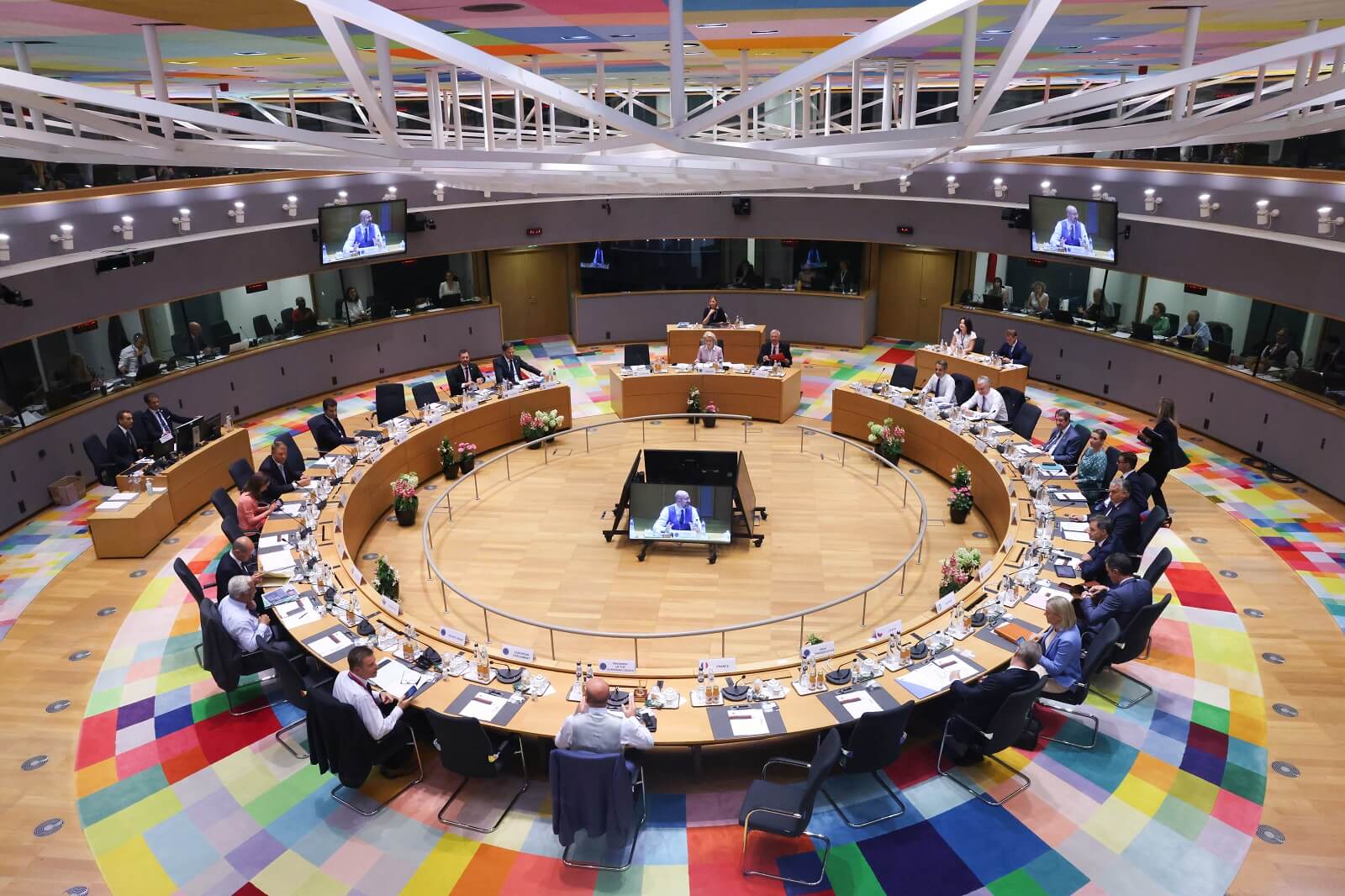
Without compromising the long-term vision for the EU, the current crisis is one of the most crucial litmus test for the unity of the EU. The upcoming meeting of the European Council must allow for decisive actions, bringing solutions to the short-, medium- and long-term challenges ahead of us.
(Illustration - Copyright: European Union)
Join us, stay informed
Subscribe to have all the latest news and developments delivered straight to your inbox.