
27 June 2023
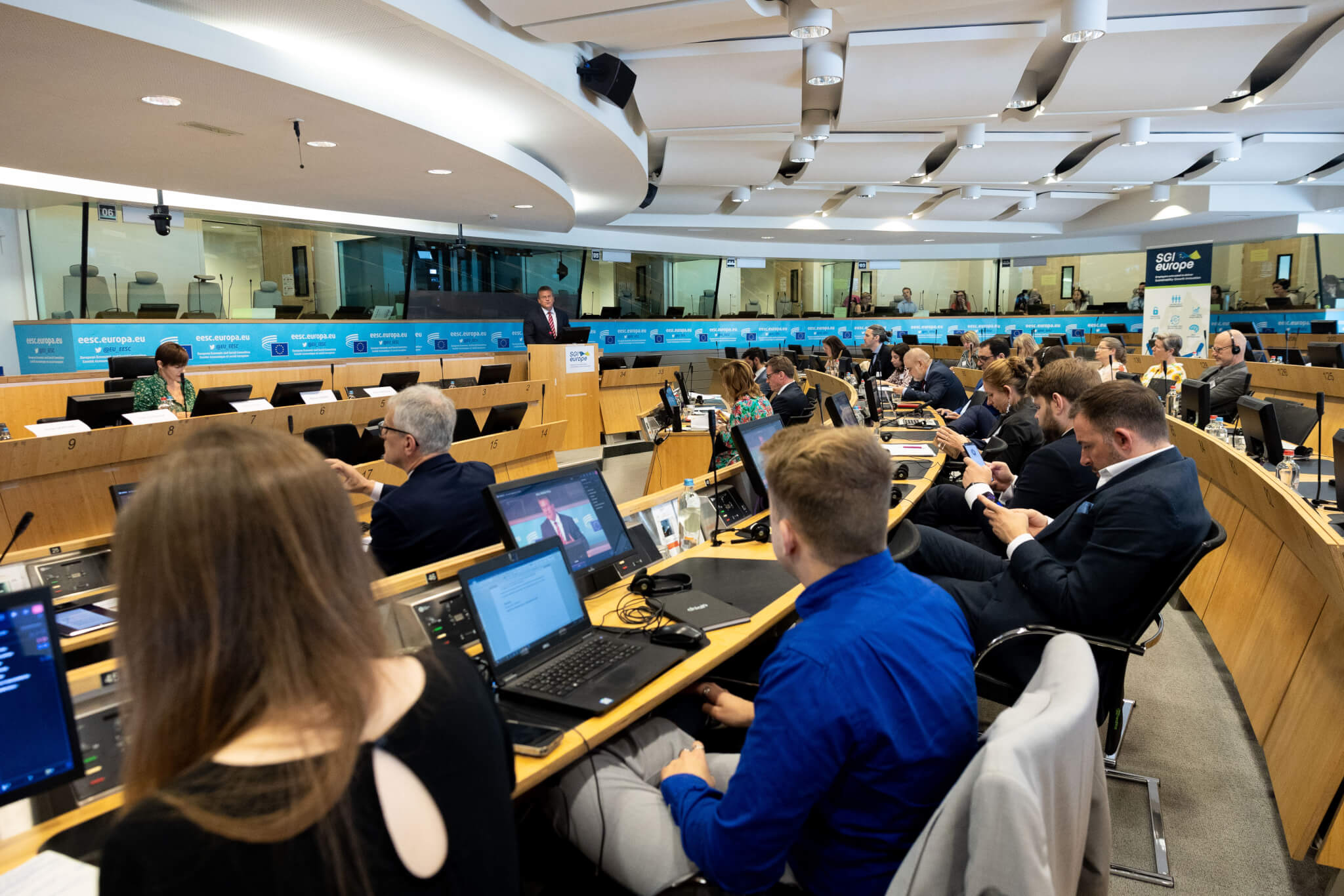
On 23 June 2023, on the occasion of the UN Day of Public Services, SGI Europe organised the event ‘The EU Single Market at 30: What role for SGIs in its future?’. It highlighted and reflected on the place of SGIs and public services in the EU single market. Marking the 30th anniversary of the single market, the reflection took stock of the past and looked at future challenges.
Opening the event, Oliver Röpke, President of the European Economic and Social Committee (EESC), emphasised the role of the Single Market in addressing emerging new challenges, the importance of SGIs and involving civil society and social partners in promoting upward social convergence. During his introductory remarks, Pascal Bolo, President of SGI Europe, highlighted the pivotal role of SGIs and public services in the fair and sustainable growth of our societies. Finally, providing a keynote address, Maroš Šefčovič, European Commission Vice-President for Foresight and Inter-institutional Relations, called for the recognition of SGIs as an essential part of the EU model, its resilience and open strategic autonomy.
Following those introductory addresses, the first panel reflected on the 30 years of the Single Market, highlighting achievements and lessons learnt. In this panel, Outi Slotboom, Director at the European Commission’s Directorate General for Internal Market, recalled the evolving nature of the single market and its current focus on issues such as social regulations, climate policy and consumer protection. Alberto Mazzola, Executive Director of the Community of European Railway and Infrastructure Companies (CER), brought up a clear example of an opportunity brought up by the EU single market: the connection between EU capitals and major cities with high-speed rail and the economic development those connections have allowed. On its side, Botond Szebeny, Secretary General of PostEurop, addressed the postal sector's specificities, which is increasingly recognised as a critical infrastructure, and contributes significantly to the resilience in crises. Finally, Antje Gerstein, member of the EESC’s Employers' Group, highlighted the challenges still faced by some sectors, such as the retail sector, which keeps facing hurdles when attempting to establish businesses in some Member States.
The second panel revolved more specifically around the future needs of SGIs to continue being enablers of sustainable transition. The first panellist, Nathalie Berger, Director at the European Commission’s Directorate General for Structural Reform Support, explained how the European Commission supports Member states in implementing growth-enhancing reforms in SGIs, including improving waste collection, education, and healthcare services. On his side, Kim Jorgensen, Director General and European Investment Bank’s Brussels Permanent Representative, emphasised the EIB’s role as the main European bank for the twin transition and making energy systems more secure, climate resilient, and inclusive. Helena Viñes Fiestas, Chair of the Platform on Sustainable Finance, explained the importance of the implementation and take-up of the EU Taxonomy by economic actors, highlighting its added value for succeeding in the green transition. Fabrizio Rossi, Secretary General of the Council of European Municipalities and Regions (CEMR), pointed out that local and regional governments mobilised the most significant share of public investments necessary for the green transition and called for a strengthened partnership between EU institutions and local and regional governments.
Finally, Valeria Ronzitti, General Secretary of SGI Europe, concluded the event, noting that SGIs have long been recognised as enablers of economic activity and EU competitiveness. She highlighted that, in light of the socio-economic transformation faced in the last decade, it is time to acknowledge that SGIs are value-creating actors on the market.
Join us, stay informed
Subscribe to have all the latest news and developments delivered straight to your inbox.