
24 May 2022
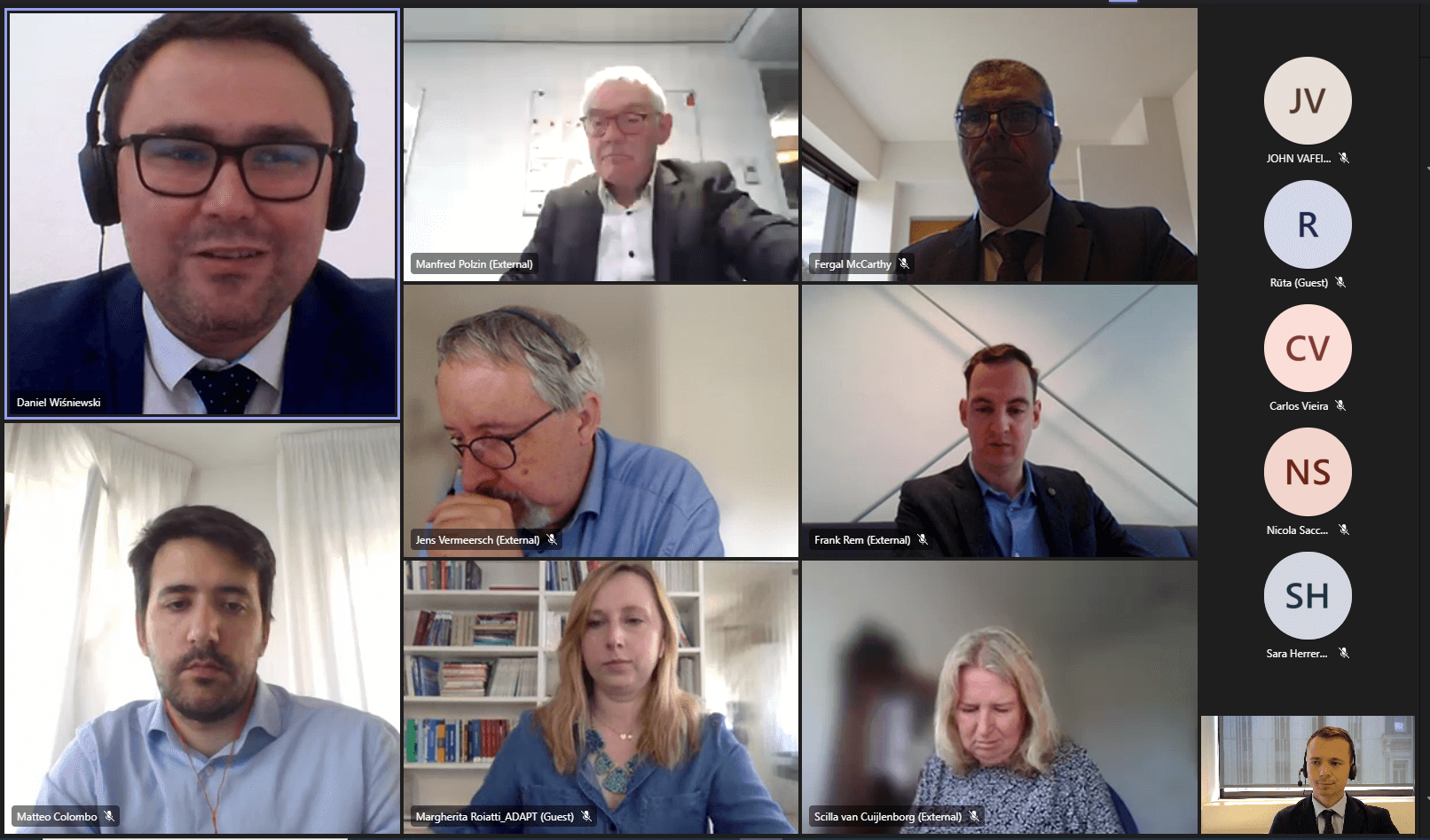
On 24 May 2022, SGI Europe and the European Federation of Education Employers (EFEE) organised the third sectoral workshop of the European project ‘Green Skills in VET’, which focused on the transport sector. The project is co-financed by the European Commission.
Daniel Wisniewski, General Secretary of EFEE, and Ștefan Enică, Projects and Policy Officer of SGI Europe, opened the workshop, emphasising the challenges ahead for the transport sector. Those include, amongst others, decarbonisation, labour shortages, and digitalisation, as well as the need for effective skills strategies based on skills forecasts and development.
Introducing the topic, Frank Rem, Policy Advisor for Transport and Logistics at MBO Raad, underlined that in 2021, 27 qualifications were updated, with the popularisation of the competencies related to the construction and maintenance of electric vehicles and transportation planning competencies. Likewise, the segregation between the occupations decreased within the sector, requiring employees to broaden their area of expertise.
Katja Kirsten, E-Learning and Development Coordinator at the Academy of the Association of German Transport Companies (VDV), highlighted that, at all levels of activity, employees need to have sustainability knowledge and to identify areas of work which will transform. Furthermore, the training should be closer to the working context, with an essential role of facilitators for the education providers.
Nicola Sacco, Professor of Transportation Engineering at the University of Genoa, presented the ongoing European project Skill Training Alliance for the Future European Rail System (STAFFER), stressing the primary existing skills gaps in the railway industry, including digital skills, and at cross-border and transnational level based on improving the communication, problem-solving, and learning skills.
SGI Europe believes that social partners, together with education and training providers, public employment services and public authorities, must be involved in skills intelligence. This approach should better link labour market needs with training curricula and qualifications and enable workers and enterprises to anticipate changes and innovation related to the green and digital transitions.
Join us, stay informed
Subscribe to have all the latest news and developments delivered straight to your inbox.